


We invite you to have a look at the 54th issue of Turvaja newsletter.

Newsletter No. 55
March 2026
Decisions of the Estonian Industrial Property Board of Appeal
I Oppositions
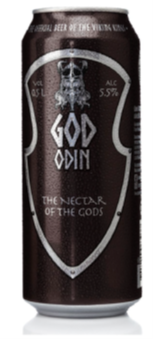
Decision No. 2269-o
Earlier trademark
Opposed trademark
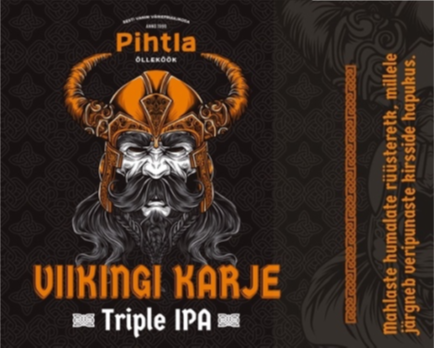
Opposition to registration of the trademark ““VIIKINGI KARJE + device“.
Questions arose during the opposition regarding the opponent’s alleged hidden representation. The Board found that the opponent participated in the proceedings personally, as the documents were signed by them, and that involving an attorney without a patent attorney license does not grant representation rights nor affect the validity of the documents. The use of a law firm’s email address was merely a technical measure and did not indicate a hidden representative relationship.
The Board held that, in the case of a jointly owned EU trademark, an opposition can be filed by a single co-owner, as an interested party does not necessarily have to be all co-owners of the earlier right together. In this case, one co-owner submitted the opposition in a timely manner, and the other co-owner supported their position during the proceedings; therefore, there was no reason to believe that the actions were taken against the other co-owner’s interests. The other co-owner was not considered a (co-) opponent, as they did not fulfil the formal requirements nor have the required representative.
The opposition was initially filed on the basis that the trademarks were identical, but the opponent substantively argued their visual similarity. Later, the opponent clarified that they relied on similarity and the likelihood of confusion, which the Board did not consider a change to the claim, as the arguments remained the same.
Although the goods are identical, the Board found that the trademarks, as a whole, are neither identical nor similar, and there is no likelihood of confusion. Their dominant word elements are clearly different visually, phonetically, and semantically, and the general use of the Viking motif does not create sufficient similarity. Likewise, the similarity of individual design elements (e.g., the Viking head) does not affect the overall impression, as they are not dominant or determinative for the average consumer. Therefore, there is no basis to conclude that consumers could confuse the trademarks or associate them as originating from the same source.
The opposition was dismissed.
II Decisions of the Domain Disputes Committee
Case No. 26-1a-382
Opposed domain name: investor.ee
The Committee finds that the domain name is formally identical to the opponent’s trade name and trademark. The word “investor” is a descriptive term in common language, and in domain name dispute practice, the mere use of a dictionary word or phrase in a domain name does not automatically grant rights or legitimate interests to the registrant; the existence of a right or interest requires actual use of the domain name in the ordinary meaning of the word.
The Committee finds that the registrant has demonstrated their right and legitimate interest in using the domain name, as the domain refers to the descriptive meaning of the word and the registrant used the domain before the dispute arose in connection with a website providing general information about investment activities. The opponent has not provided evidence of use of their trade name or trademark, likelihood of confusion, or infringement of rights; therefore, the condition for transferring the domain name is not met.
The Committee finds that the opponent has not demonstrated that the domain name was registered or is being used in bad faith, as there is no evidence that the registrant acted with the intent to harm the opponent’s rights or to benefit at their expense. The registration and holding of the domain name in a portfolio, including for resale, constitutes lawful and bona fide commercial activity by the registrant.
The opposition was dismissed.
Case No. 25-1a-381
Opposed domain name: hd24.ee
The opponent claimed that the domain name incorporated their earlier trademark. The Committee found that the opponent had an earlier right, as the domain name contained a recognizable trademark and the additional element was non-distinctive and commonly used in business. The registrant, in the Committee’s view, failed to demonstrate a right or legitimate interest in registering the domain, since their claim that the domain had another meaning arose only after the opposition was filed, and the domain’s use was directed at consumers seeking the opponent’s products.
The Committee concluded that the use of the domain name was in bad faith, as it caused confusion and created the impression that the registrant was affiliated with or authorized by the opponent. The domain directed consumers commercially to the opponent’s products, exploiting the trademark’s reputation for economic gain. Considering both the lack of legitimate interest and the bad faith, the Committee decided to uphold the opposition.
The domain name was transferred to the opponent.
III Court Judgments
Tallinn Circuit Court
Civil Case No. 2-25-12179
Claim for Injunctive Relief and Damages.
In 2025, the Claimant filed a lawsuit with the Harju County Court against Respondent I and Respondent II, seeking the restoration of access to its health and fitness application on Google Play and Samsung Galaxy Store, as well as prohibiting any unapproved submissions related to the application on these platforms. The Claimant alleged that Respondent I maliciously registered the name of the application as an EU trademark, despite having no connection to its development, and blocked its sale in the European Union, causing economic damage. Respondent II was created following the division of Respondent I and was held jointly liable, as the infringements occurred before the division.
The Claimant emphasized that its application had been available since 2016, was popular in the U.S. market, and recognized as a high-reputation health and fitness app. Its name is a unique coined term, also used as the Claimant’s business name, with significant recognition. Due to Respondent I’s bad-faith actions, the Claimant suffered lost revenue and submitted tort-based claims, arguing that Respondent I interfered with its business operations and acted contrary to good commercial practices.
The County Court initially denied the Claimant’s request for interim relief and refused to accept the lawsuit for consideration, finding that the Claimant did not hold a valid EU trademark and that the claim did not protect a legally enforceable right. The Claimant filed an appeal, arguing that the claim was not conditional because it was based on completed infringements with ongoing harm, and that Respondent I’s bad faith and the need to prevent further damage justified proceeding with the lawsuit. The Claimant highlighted its prior rights in other jurisdictions and the application’s market reputation, noting that its rights arise retroactively from the publication of its trademark application, and that EUIPO proceedings may take more than a year, which could result in claims expiring before the case is resolved.
The Tallinn Circuit Court found that the County Court’s refusal to accept the claim was unjustified. The Circuit Court held that the Claimant provided sufficient evidence of Respondent I’s bad-faith conduct, including unethical use of its EU trademark to disrupt the operations of the Claimant’s globally recognized application. The Circuit Court emphasized that the application has a unique name, market significance, and recognition, and that Respondent I’s actions were aimed at halting its sales to gain unfair economic benefit. It was further demonstrated that Respondent I did not use the trademark to distinguish its own activities but to exploit Claimant’s prior reputation.
The Circuit Court concluded that the Claimant’s claims did not depend on a currently valid EU trademark, as the infringement and damage had already occurred, and the Claimant could still protect its rights. The claim was considered to have merit, since the Claimant could validate its rights through EUIPO proceedings, and the appeal sufficiently justified exceptional circumstances to safeguard the Claimant’s rights and prevent further harm. The contested order was annulled, and the case was remitted to the County Court for a decision on admitting the claim for consideration.
Supreme Court
Civil Chamber
Case No. 2-18-11694
A cassation appeal and a cross-appeal in cassation arising from a claim for damages.
Exeltis Baltics UAB, as the Claimant, filed a claim against Bayer Pharma AG, the Respondent, seeking compensation for damages and interest exceeding €600,000. The Claimant had marketed the medicinal product JANGEE in Estonia; however, at the Respondent’s request, in 2011 the import, sale, and advertising of the medicine were prohibited under a provisional injunction due to alleged patent infringements. Subsequently, the Respondent’s patents were invalidated and the proceedings were closed. The Claimant argued that the nearly six-year sales ban caused direct financial loss and substantial lost profits, and that the manufacturer, Leon Farma, also bore loss but transferred its claim to the Claimant.
The Respondent contested the claim, arguing, among other things, that the damages were not proven, part of the losses resulted from the Claimant’s own actions, the calculation of lost profits was speculative, and the manufacturer’s losses were not compensable.
The County Court partially upheld the claim, awarding approximately €50,000 in lost profits while rejecting the remainder of the damages due to insufficient evidence. The Circuit Court partially overturned this decision and ordered the Respondent to pay over €527,000, holding that the Respondent was liable for damages caused by the injunction regardless of fault. The Circuit Court considered the award justified both for direct financial losses, the Claimant’s lost profits, and the damages incurred by the manufacturer.
The Respondent filed a cassation appeal, challenging both the basis of liability and the amount of damages, particularly the compensation for the manufacturer’s losses and the calculation of lost profits. The Claimant filed a cross-appeal in cassation, arguing that the damages should have been awarded in full.
The Supreme Court agreed that the Respondent’s liability for damages caused by the injunction does not depend on fault: if the patents underlying the injunction are later invalidated, the party that sought the injunction may be liable for the resulting damages even without proof of fault. At the same time, the court may take the circumstances of the case into account when determining the extent of damages and reduce the award if appropriate.
Regarding the manufacturer’s damages, the Supreme Court found that the injunction regime does not grant a direct right of claim to a non-litigant, and any potential liability could arise only under tort law. The Circuit Court had not sufficiently explained the nature of the Respondent’s unlawful act in relation to the manufacturer, nor whether the Respondent’s actions were directly aimed at interfering with the manufacturer’s business operations. Furthermore, the Claimant had not been informed which facts it must present to substantiate such a claim. Therefore, the Circuit Court must re-examine these issues and clarify the burden of proof for the parties.
Concerning lost profits, the Supreme Court emphasized that the Claimant must prove the likelihood of earning the income and provide a calculation of potential revenue, but all costs that would have been incurred to generate the income must be deducted from the hypothetical revenue. The Circuit Court had deducted only the cost of purchasing the medicine and had not sufficiently accounted for other probable expenses, such as transportation, storage, and distribution costs. In addition, there were computational inconsistencies in the decision that rendered the conclusions insufficiently reasoned.
It is also necessary to reassess whether and to what extent the damages should be reduced on the grounds that the Claimant did not mitigate its costs, and to consider the request to reduce interest. In conclusion, the Supreme Court found that the existence of damages may be established, but the extent and legal basis require more thorough and proper analysis.
The Supreme Court annulled the Circuit Court’s decision and remanded the case to the same court for a new review, finding that the Circuit Court had both misapplied substantive law and violated procedural norms.
The material provided in this newsletter is for informational purpose only and does not contain legal advice.
For additional information please contact our patent agency:
Patendibüroo TURVAJA OÜ
Liivalaia 22
Tallinn 10118
Estonia
© Patendibüroo TURVAJA OÜ, 2026
In memoriam Enn Urgas (1953-2025)
It is with deep sorrow that we announce the passing of Enn Urgas (May 07, 1953 – November 15, 2025), a highly respected European and Estonian Patent and Trademark Attorney and our esteemed colleague.
We invite you to have a look at the 53rd issue of Turvaja newsletter.